Experimenting with Salt and Light
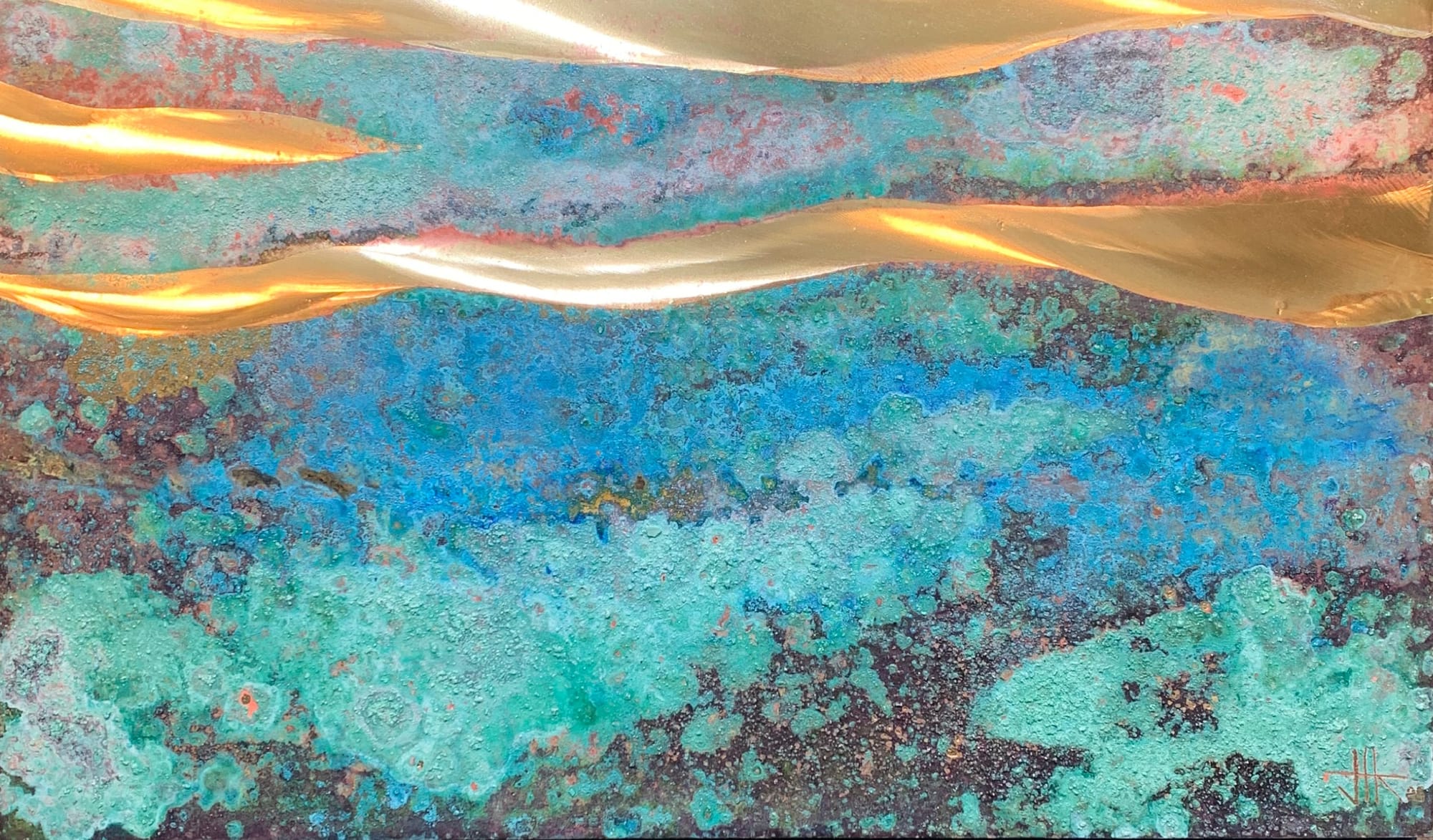
The fun part about painting on metal: it can do things traditional canvas can't. Recently, I've been experimenting with chemical reactions, a technique I'm calling Salt and Light.
As an artist I'm best known for using metal to represent water, light, and create animated scenes but there are so many other exciting possibilities I want to explore and incorporate into my work.
I was inspired by metal jewelry artists who use chemicals to create different patinas and colors. The greens and blues I saw in their work naturally complement the colors in my wave and wildlife scenes. I had to try the technique in my own style!
I start with a polished piece of brass or copper and add different combinations of various salts, ammonia, vinegar, nitrates, sulfurs, and more to trigger chemical reactions. If there’s an area I want to keep isolated, I use cardboard stencils to keep the materials off. I like to apply the different elements in alternating layers and use a mortar and pestle to grind the salts into chunks for various textures. I let these additions sit on the metal overnight to do their work.
Once the chemical reaction has the look I'm going for, it’s a race against time to add paint and grind the surface. The metal will continue to oxidize until I add the finishing clearcoat, isolating the painting from the air. I need to finish the whole process in a few days.
I'm really enjoying the element of surprise as I develop this technique. It’s exciting and unpredictable. Adding patina to my artwork gives the pieces texture and adds a new layer of interest. The unaltered polished brass gives the scene motion while the patina can have the look of earth or foam. Together they add a new dimension to my composition.
I plan to continue experimenting with this technique along with my traditional styles. This is the part of being an artist I love: pushing the possibilities of my medium and challenging myself artistically to creating beautiful things.